Last updated November 20, 2026
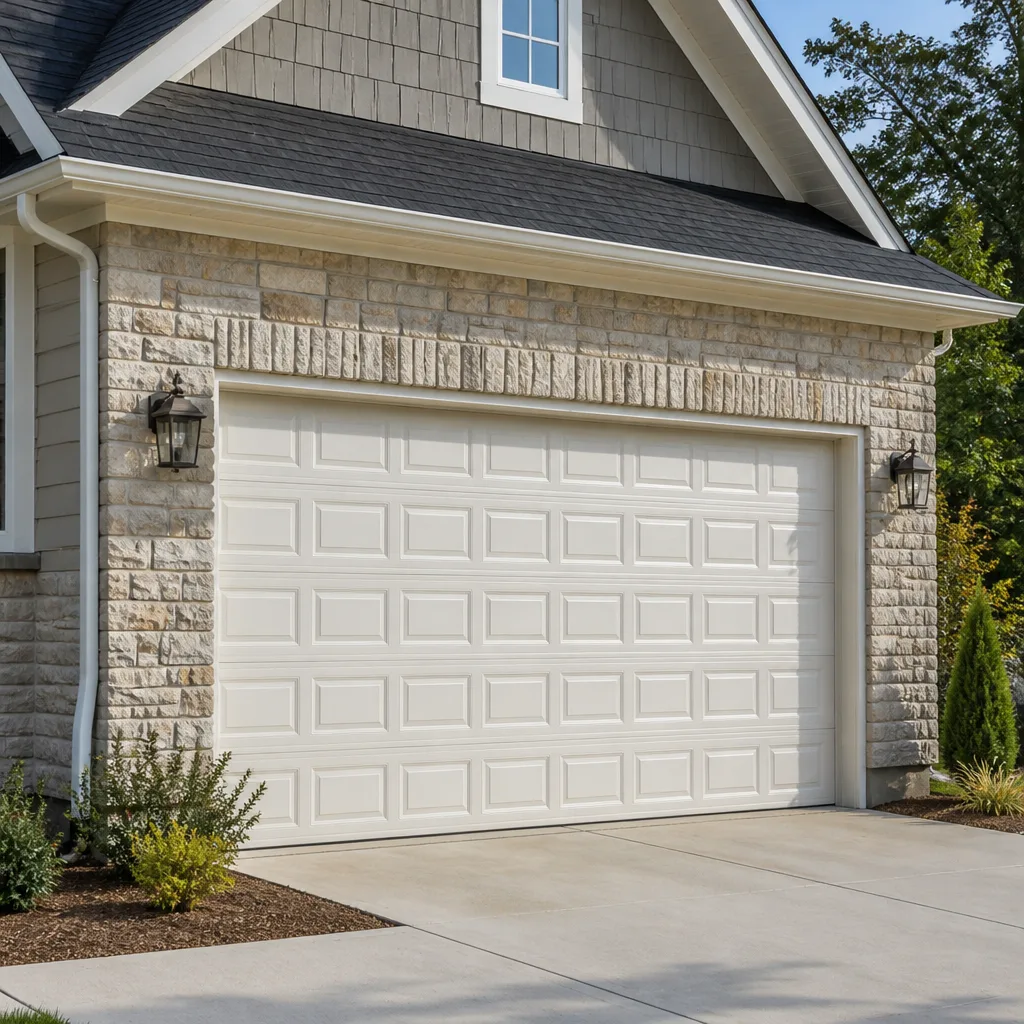 Raised-panel steel
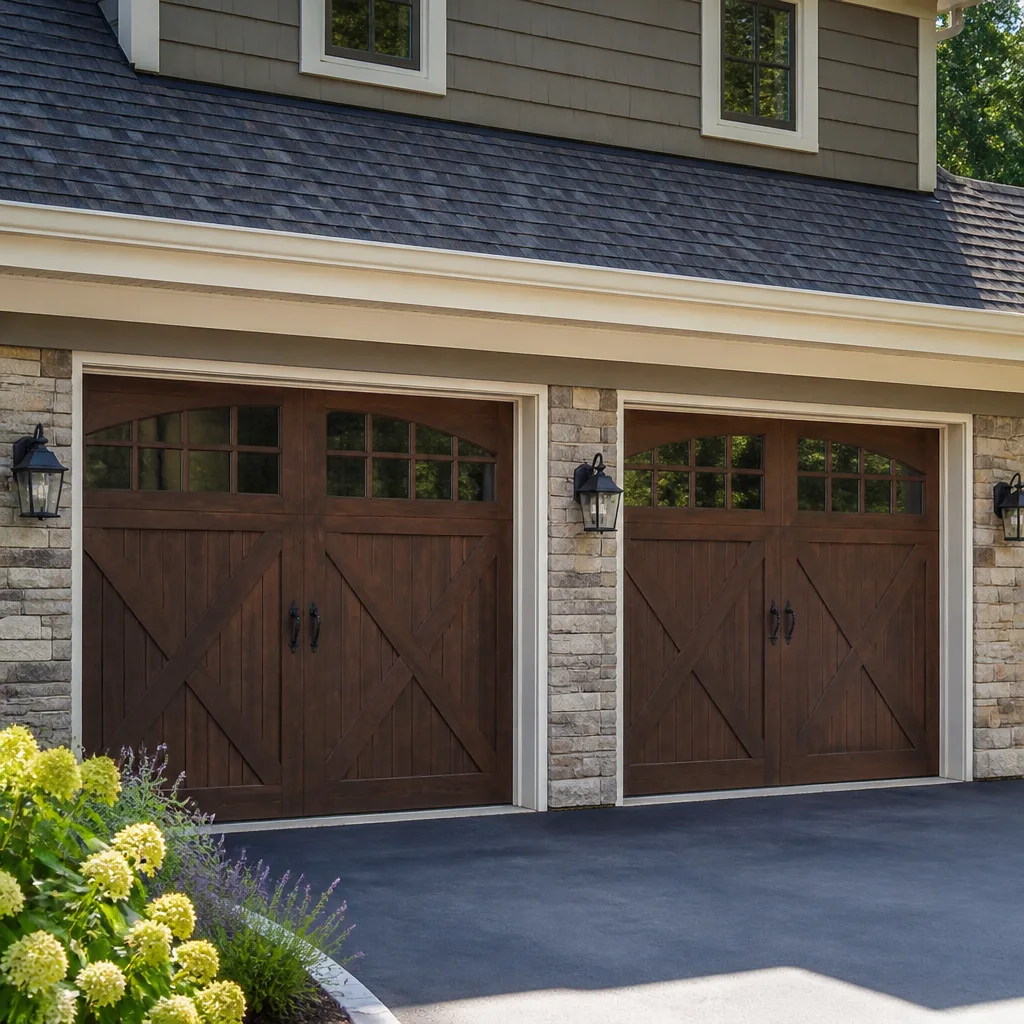 Carriage house
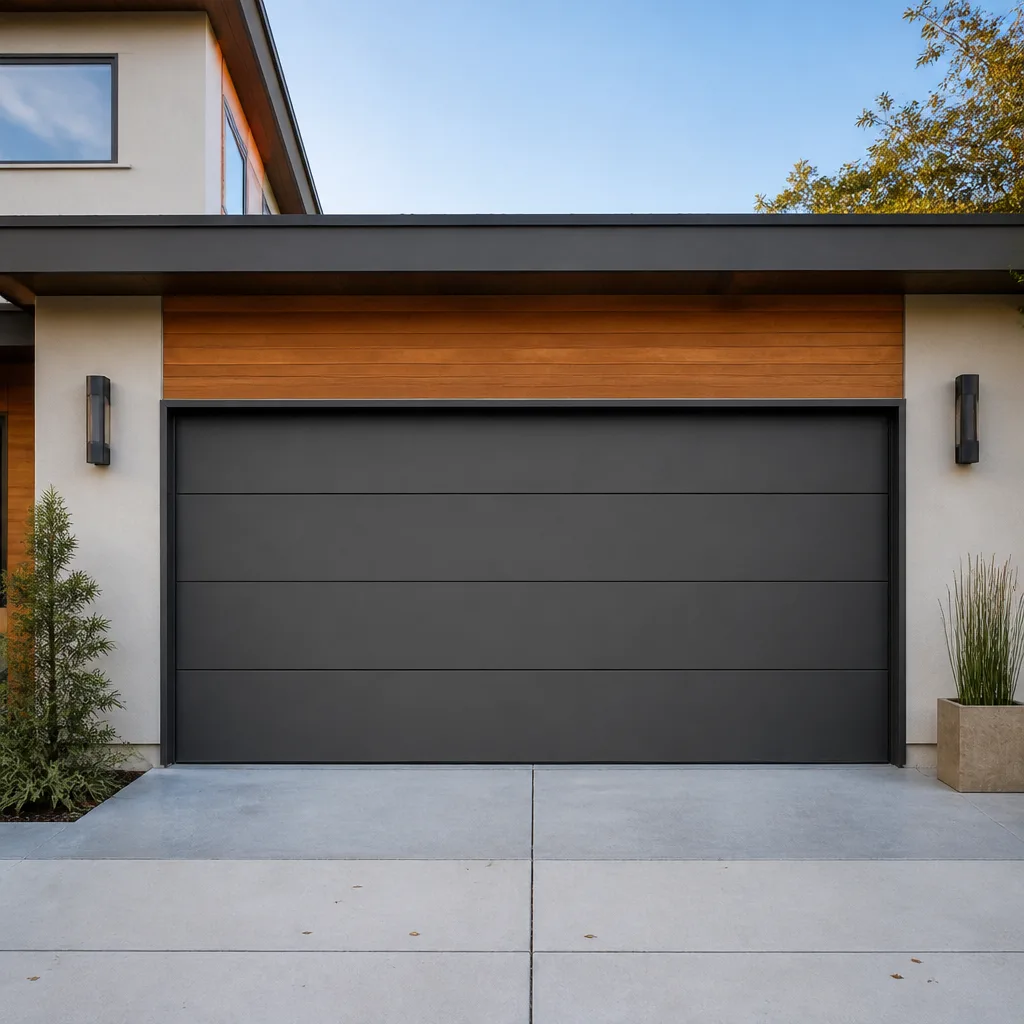 Modern flush
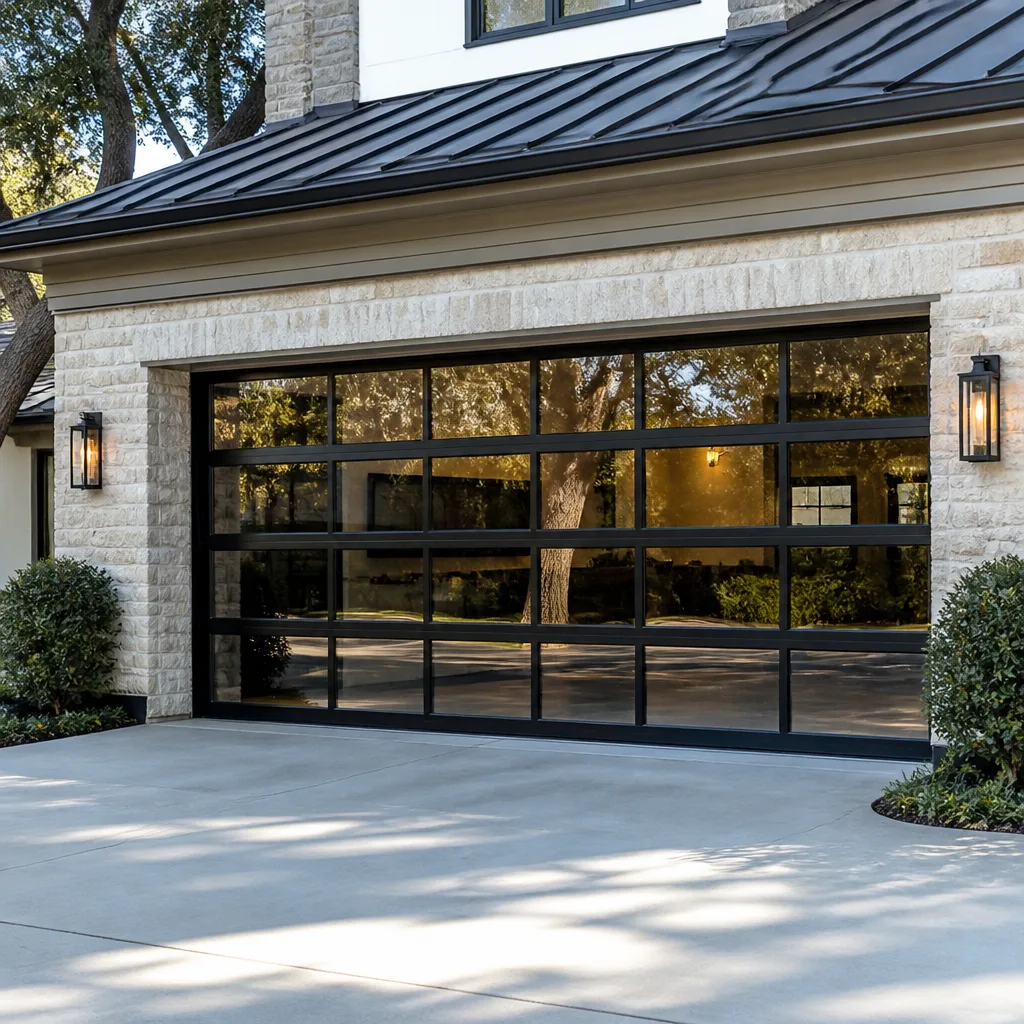 Full-view glass
 LiftMaster openers
 Chamberlain openers
Full 25-point door and opener safety check with every visit - springs, cables, rollers, tracks, and your LiftMaster or Chamberlain opener included
You get a price before we start. It does not change when the pro arrives.
Get your free estimateGarage Door Cost Breakdown: The Mount Washington Homeowner’s Reference for 2026
Two quotes land in your inbox for the same broken spring: $400 from one company, $900 from another. Same door. Same neighborhood. The gap usually isn’t greed. It comes down to one line item, whether the technician replaces both springs at once or only the broken one, and only one of those choices makes economic sense. A door’s springs are a matched pair engineered to carry the same load; replacing one leaves the other carrying a job it was never sized for. The rest of a quote hides similar decisions about cables, rollers, panels, and the opener. This reference walks a Mount Washington homeowner through each component, what drives its cost, and how to read a quote line by line so you know whether you’re being charged fairly or padded.
Quick Answer
Garage door repair in Mount Washington typically runs from about $150 for a single small component to $1,200 or more for a full panel or opener replacement. The single biggest factor in most quotes is the spring system: a single spring replacement falls in the $150-$350 range, while a matched pair that a responsible technician will usually recommend costs roughly double that. Labor, brand of part, and the age of the door fill in the rest, and the written estimate you sign before any work starts is the price you pay.
Styles & brands we work with
- Raised-panel steel
- Carriage house
- Modern flush
- Full-view glass
- LiftMaster openers
- Chamberlain openers
Table of Contents
- Component-Level Cost Benchmarks for 2026
- Why Labor Rates in Mount Washington Differ From Cincinnati Metro Averages
- How to Read a Quote Line by Line
- Repair vs. Replace: A Decision Framework
- Which Upgrades Pay Back and Which Are Pure Preference
- What Mount Washington Weather Does to Door Costs
- Common Mistakes to Avoid
- When to Call a Professional
- Frequently Asked Questions
Component-Level Cost Benchmarks for 2026
Component pricing in Mount Washington tracks the Cincinnati metro closely because parts distributors supply the whole region from the same regional warehouses. Below are the typical ranges we see, quoted as estimates. The written price you sign sets the final number.
Springs
- Single torsion spring replacement: $150-$350 (one spring)
- Matched pair replacement: roughly twice the single-spring figure
- Extension spring replacement (per spring): $90-$180
A matched pair is usually replaced together because the surviving spring has already absorbed years of cycles the new one hasn’t. Replacing one now often means paying for a second visit soon.
Cables, Rollers, and Tracks
- Cable replacement (per cable): $100-$200
- Roller set replacement: $100-$200 for all rollers
- Track realignment: $100-$250
- Hinge replacement (per hinge): $10-$25 plus labor
Cables and springs belong to the same high-tension system. A cable that snaps under load can whip and cause serious injury, so we recommend keeping any cable work in the hands of a trained technician.
Panels and the Door Itself
- Single panel section: $150-$500 depending on size and style
- Bottom section (dents, rust): often the most-replaced panel
- Full door replacement: $800-$2,500+ depending on size, material, and insulation
Matching a replacement panel to an older door is the tricky part. Your door’s brand matters here: an Amarr panel won’t fit a Wayne Dalton door, and profile, color, and embossment vary. Factory familiarity with the major brands speeds up the search for the right match.
Openers
- Opener repair (circuit board, gear, or logic issue): $150-$350
- New chain-drive opener installed: $350-$550
- Belt-drive opener installed: $450-$650
- Smart opener installed: $500-$800
Opener work on a brand you already own saves time and guesswork. We’re trained on LiftMaster, Chamberlain, Genie, Craftsman, and Raynor systems, so diagnostic time is spent on the actual fault rather than on hunting for the right manual.
Why Labor Rates in Mount Washington Differ From Cincinnati Metro Averages
Mount Washington is a neighborhood within the Cincinnati city limits, but that doesn’t mean its pricing matches a downtown quote. Labor rates reflect the cost of getting a trained technician to your driveway with the right parts, and several variables shift that number in this neighborhood.
First, housing stock. Mount Washington has a wide mix of mid-century ranches and newer builds, and the two kinds of garage doors don’t cost the same to work on. A single-car door on a ranch is a faster job than an oversized two-car door with a complicated track layout and heavy reinforced panels. Second, access. Narrow driveways and tight cul-de-sacs slow down positioning a vehicle and setting up ladder work, and that time shows up in the labor line.
Third, travel. A company based well outside the neighborhood budget has to price in drive time and the risk of not having the right part on the first trip. A specialist who regularly works along the Beechmont and Salem Road corridors, or around the California and Anderson border, knows the typical door models here and stocks the common springs and rollers in the right range.
Fourth, season and demand. A run of cold snaps increases spring failures, and when demand climbs, so do quoted labor rates. In our experience, spring repair requests in Mount Washington peak in the colder months when steel contracts and the cycle load on a worn spring finally wins. Booking a repair when the door first shows symptoms, not after it seizes, usually means a simpler, cheaper job.
None of this is a reason to pay an inflated rate. It’s a reason to ask a technician to explain the labor line if it looks high for the scope of the job.
How to Read a Quote Line by Line
A fair garage door quote is specific. It names each part, states whether work is for both springs or one, distinguishes parts from labor, and lays out anything that might change the scope. Here’s how to go through one systematically.
- Check that parts and labor are separated. A single lump-sum number hides which part of the cost is the part and which is the time. A written breakdown lets you compare apples to apples with a second quote.
- Confirm the spring count. If the quote says “spring replacement” and lists a single price, ask directly: one spring or two? A pair should be roughly double the price of a single spring, not identical.
- Look for the opener listed separately. A door system and an opener are two different machines. If your opener is fine, it shouldn’t appear in the quote at all. If the door components are just worn and the opener is fine, one call should cover the door-side repair without touching the motor.
- Ask about the parts grade. A premium or heavy-duty spring has a longer cycle life than a standard spring and typically costs more. A homeowner should know which grade they’re getting and why.
- Check the scope of the “inspection” or “tune-up” line. A quoted tune-up should list what it covers: lubrication, balance check, roller inspection, fastener tightening. If it’s a single fee with no detail, ask what’s inside.
- Look for a written scope. The technician should leave you with the exact list of work, the parts named, and the final price. The written estimate locks the number; work starts only after you agree to it.
- Ask whether an old-panel replacement involves matching. If a single panel is being replaced on a door that isn’t brand new, ask how the technician will match the style and how long that takes, because ordering a replacement panel can extend the timeline.
Padding in a quote usually shows up as a part line for something the door may not need, or as a labor rate that doesn’t match the scope. If the number looks off, ask for a breakdown. The straightforward answer should be immediate.
Repair vs. Replace: A Decision Framework
The repair-or-replace question depends less on the calendar than on what’s actually wrong. A 20-year-old door with a failed spring could have plenty of life left in the panels and tracks. A 10-year-old door with cracked panels, bent tracks, and a burnt-out opener can be a losing bet to save piece by piece.
- Single failed component, door structurally sound: repair. One spring, one cable, one roller set. This is the simplest and cheapest scenario.
- Two or more major components worn at once, and the door is older than roughly half its expected life: lean toward replacement. Adding up several repair line items against the cost of a new door often tips the math.
- Panel damage on a newer door: repair if the panel can be matched; replace if matching would take too long or the color/profile is out of production.
- Opener failure on a younger door: replace the opener, not the door. A new opener installed is typically a fraction of a new door cost.
- Door harder to operate every season: repair likely. A door that drags or wobbles usually needs track, roller, or spring work, not a full replacement.
One more variable specific to Mount Washington: the architectural character of the neighborhood. If the home’s garage is visible from the street and the door style matters to the house’s curb appeal, a replacement budget is often justified by more than function. If the door faces an alley and only the car ever sees it, function should win, and repair is usually the smarter spend.
When in doubt, ask for both numbers. A technician can quote a repair and, separately, a new door, and the comparison usually settles the decision. If a replacement is the direction, a garage door installation quote should itemize the door, the opener (if included), the labor, and any haul-away so you see the whole picture.
Which Upgrades Pay Back and Which Are Pure Preference
Garage door upgrades split cleanly into two buckets: spending that returns value and spending that’s about personal preference. Grouping them correctly is the difference between a smart upgrade and money in a hole.
Upgrades with measurable ROI
- Insulation on an attached-garage door: a meaningful comfort improvement in the rooms above and beside the garage, especially through Cincinnati’s colder months. The ROI is measured in comfort and less heat loss, not resale.
- Smart opener controls: phone-based open/close and status reporting. A practical addition if you regularly second-guess whether you shut the door, and a low-cost upgrade relative to a full opener replacement.
- Steel panel replacement: a standard steel section is often the most durable cost-per-year choice and the easiest to source, which matters when matching a door’s existing style.
- Roller upgrades: sealed nylon rollers are quieter and last longer than cheap steel rollers, and they cost very little more on the parts line.
Upgrades that are pure preference
- Designer colors and carriage-house styles: visible curb appeal for a storefront-facing door. Worth it if the door is seen; less so on a garage nobody sees.
- Composite and wood-look panels: attractive and distinctive, but a higher initial price and more care. This is an aesthetic decision, not a durability win over steel in most cases.
- Luxury smart integrations: integration with a home system you don’t already run is an accessory, not a savings line.
A useful test: if the upgraded part is hidden from view and inside the garage, ask whether it does anything measurable. If the answer is a quieter operation or a better temperature in the room next door, it’s real. If the answer is “it looks nicer,” it belongs in the preference bucket, and that’s a perfectly good reason too, as long as you know which bucket it’s in.
What Mount Washington Weather Does to Door Costs
Cincinnati winters are the biggest cost driver Mount Washington homeowners don’t plan for. Torsion springs are steel under constant load, and repeated cycles in cold weather are the standard reason a spring gives out. Two things follow from that.
First, timing affects price. A spring that fails overnight and leaves the car trapped gets quoted at emergency rates because the job becomes time-sensitive. A door that gets serviced when it first starts dragging or the opener runs harder is a planned job at the standard rate. In practice, the smarter move is to pay attention to the warning signs and schedule repair before failure.
Second, summertime heat and humidity attack the door a different way. Springs survive the warm months more easily, but rails, hinges, and rollers accumulate grit and lose lubrication, and rubber seals dry and crack. A tune-up in spring that includes lubrication and seal inspection extends the life of the moving parts and keeps them out of the replacement budget for longer.
If a door does fail on a Saturday, we are closed that day. Call us and we will book you for Sunday. Our hours are 7am to 7pm Sunday through Friday, and when a door won’t open or close, getting on the schedule the next available morning is the fastest path back to a working garage.
See the difference
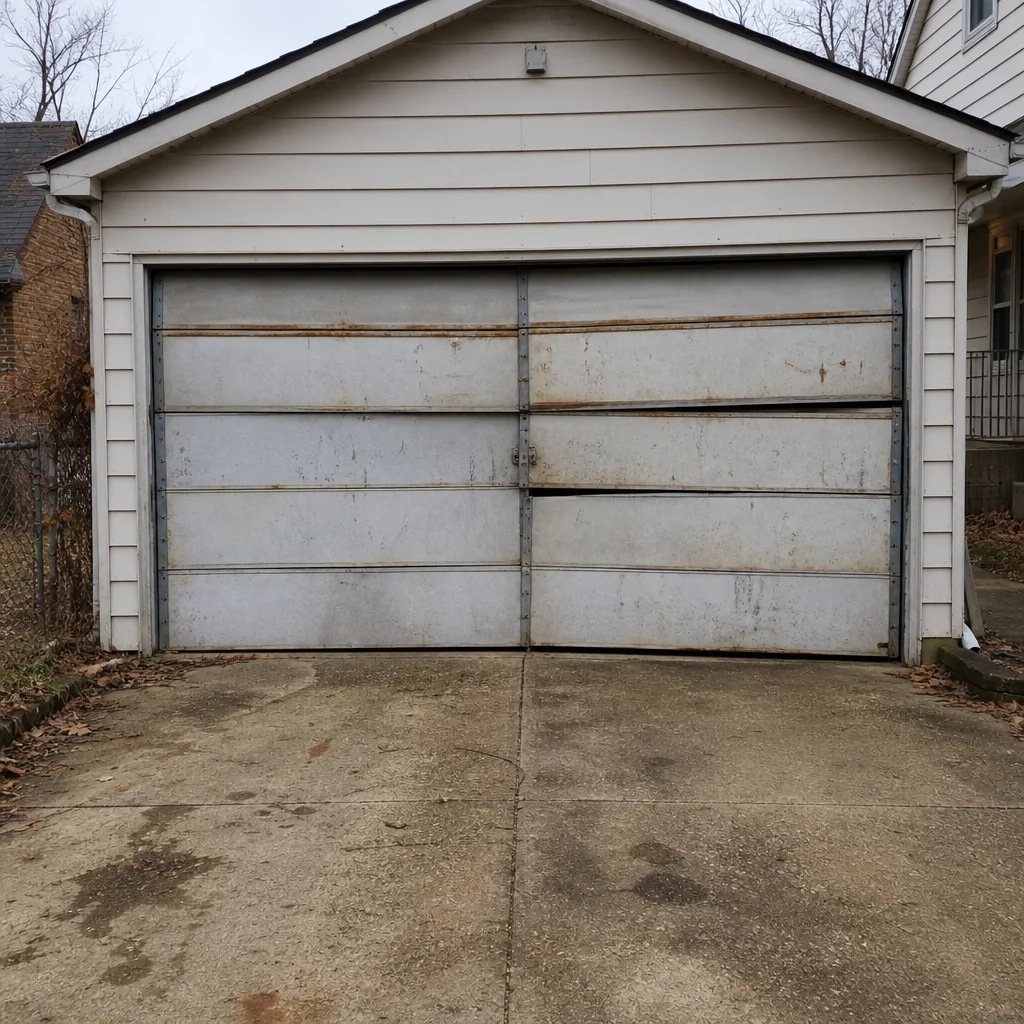 Before
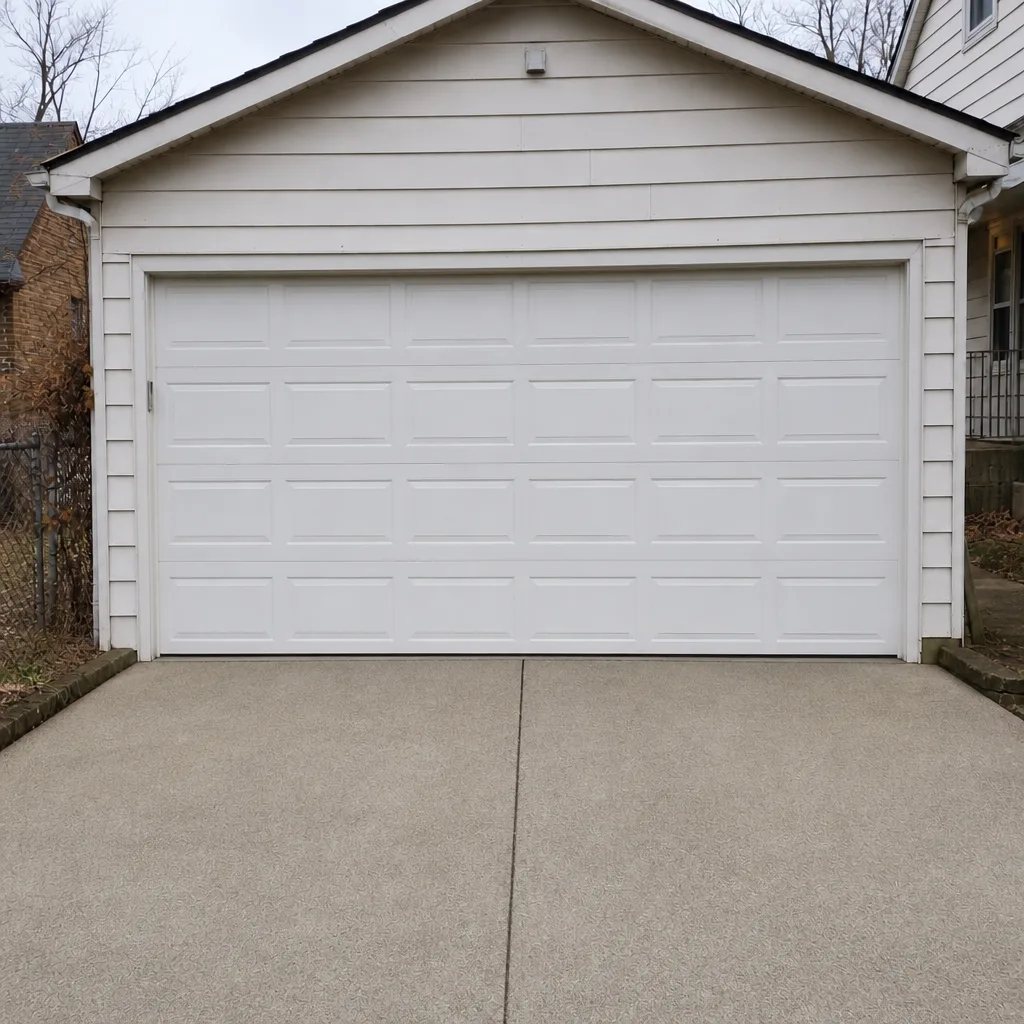 After
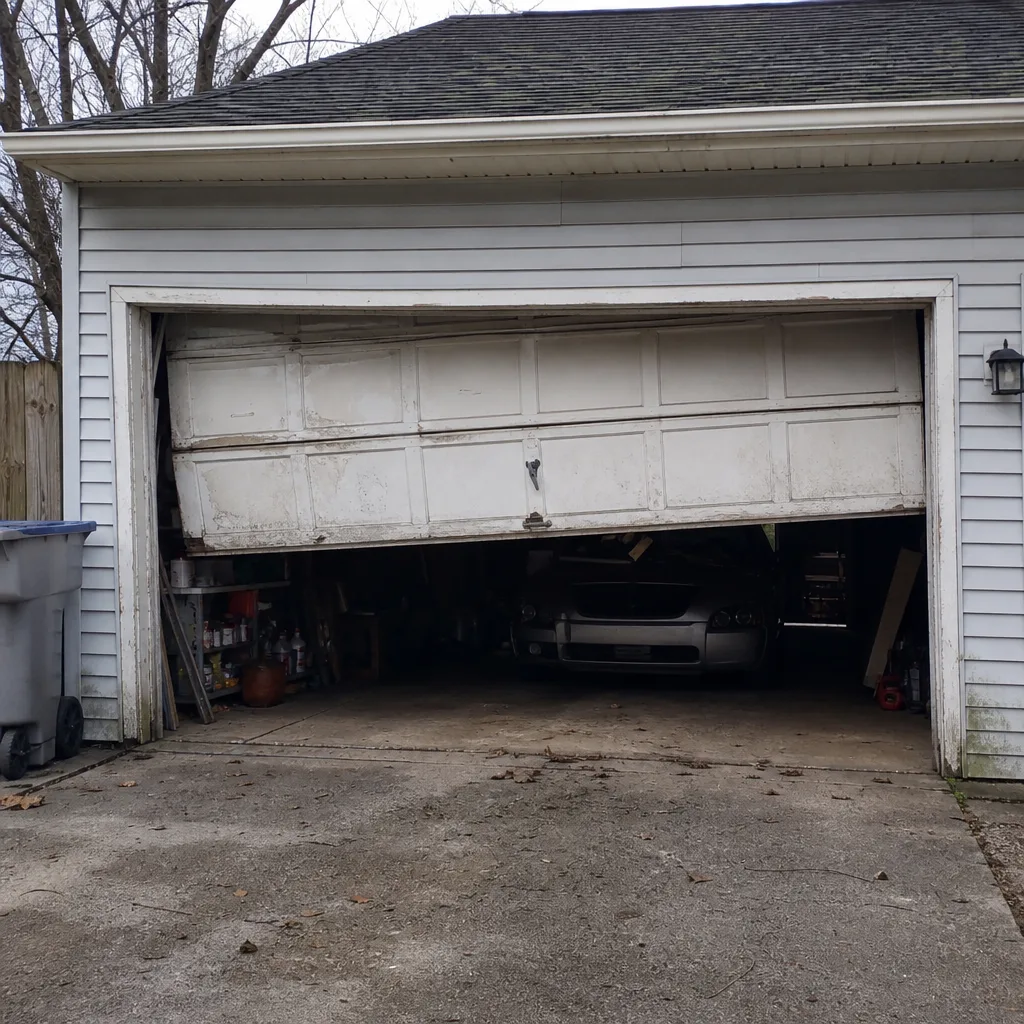 Before
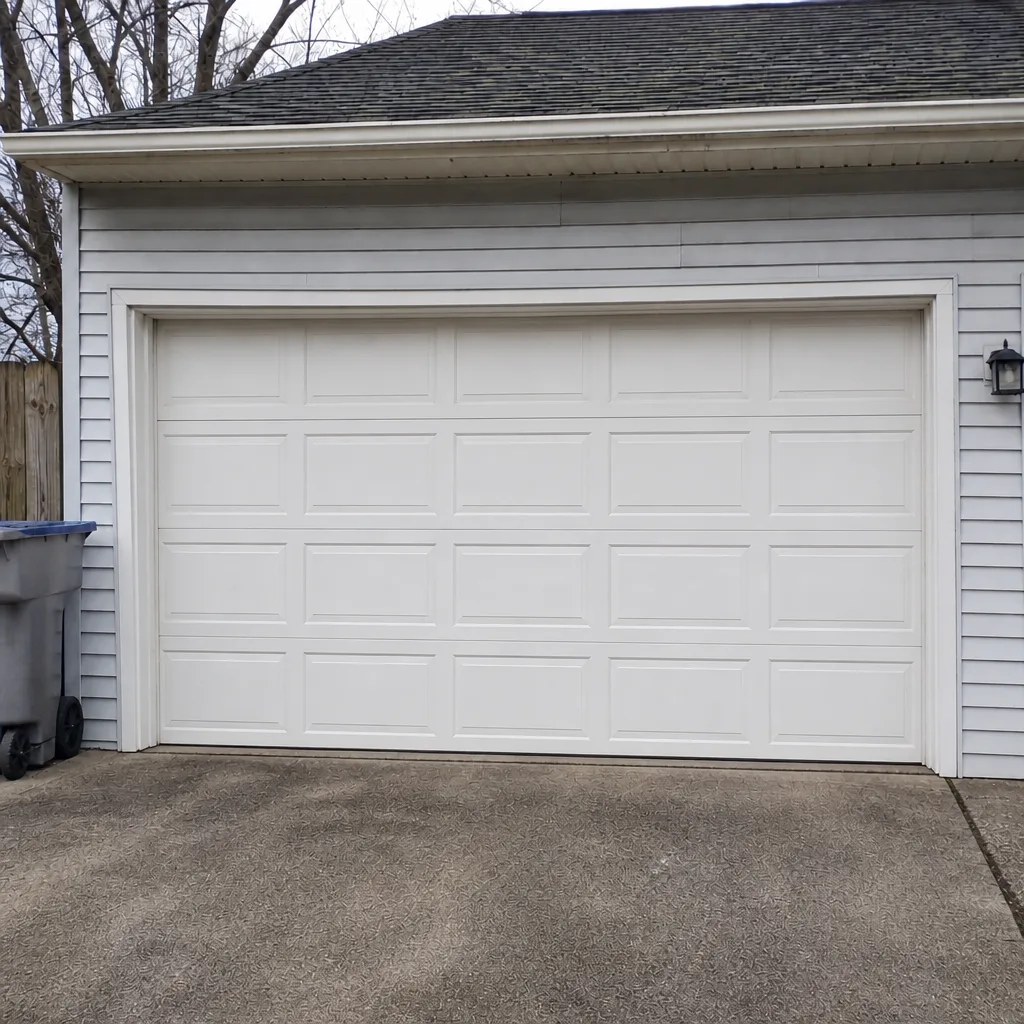 After
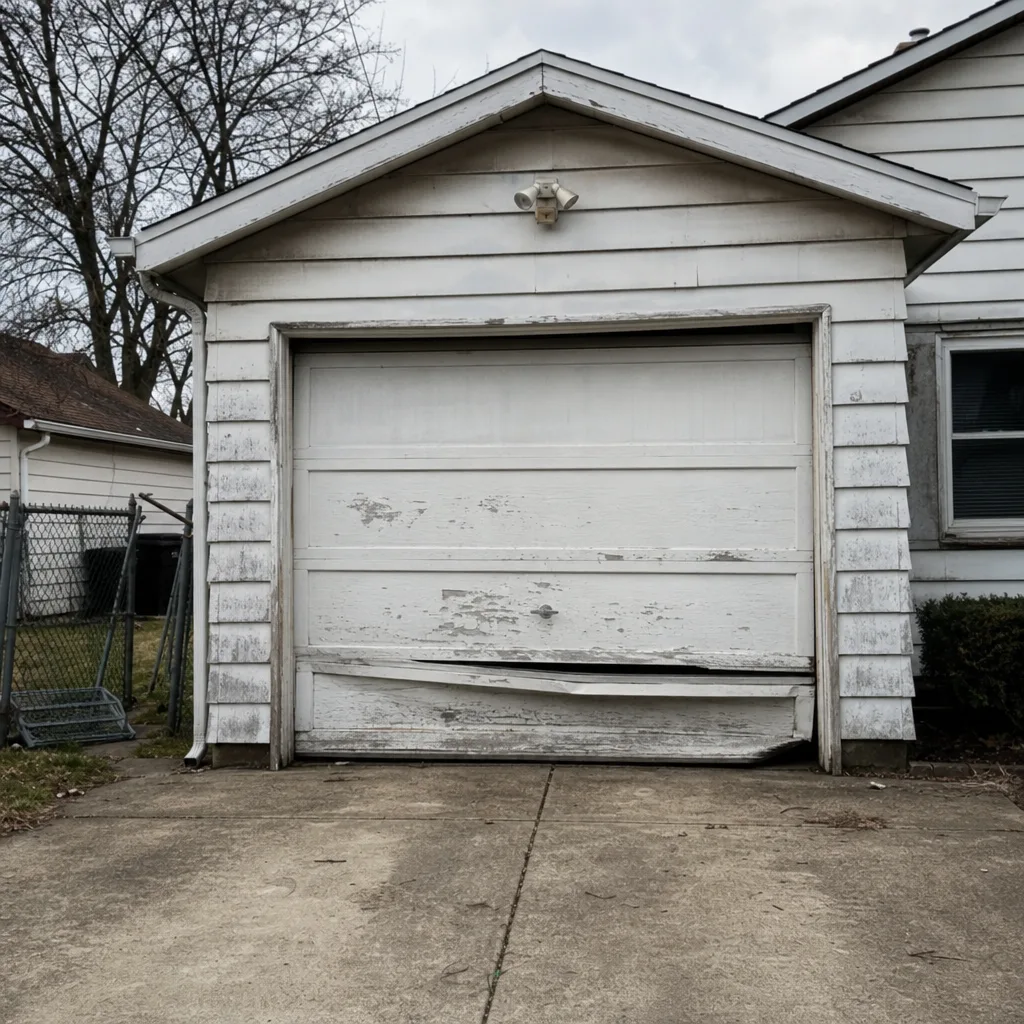 Before
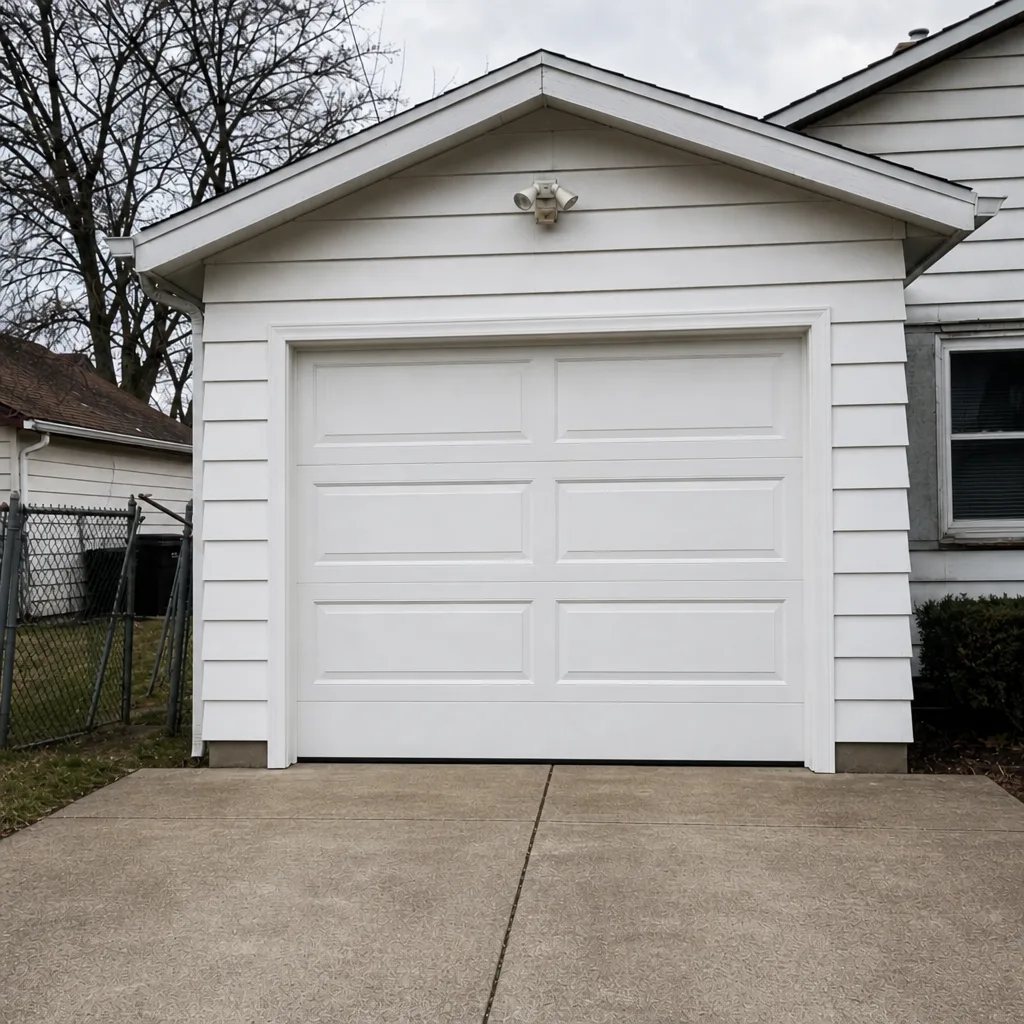 After
Common Mistakes to Avoid
- Accepting a single-spring quote without asking whether the pair makes sense. The other spring is the same age and usually close to failure. The honest answer to “one or two?” often saves a second service call within a year.
- Comparing lump-sum quotes as if they include the same scope. A $400 total and a $900 total can describe very different work. Ask each contractor to itemize parts and labor so the comparison is real.
- Letting an unlicensed handyman touch the springs. Torsion springs are under enough tension to cause serious injury if handled without the correct winding tools. It’s not the job to improvise.
- Ignoring a small dent in a lower panel until it spreads. A small cosmetic ding is cheap to live with; a rusted-through bottom section that lets water into the door is a bigger repair. Inspect the bottom panel each fall.
- Assuming a noisy opener means a new opener. Often the problem is rollers, hinges, or a loose chain, not the motor. Have it diagnosed before agreeing to a replacement.
- Skipping lubrication because the door “still works.” Rollers and hinges that run dry wear faster, and wear shows up later as a bigger repair bill. A quick seasonal tune-up is far cheaper than a track rebuild.
- Choosing a contractor by phone quote alone. A garage door is a machine with several variables. A technician who’s seen the door can quote accurately; a phone estimate is a guess.
When to Call a Professional
Some garage door issues are cosmetic and can wait. Others need a technician now. If the door won’t open or close, if a spring has visibly snapped or the door is hanging at an angle, if a cable is loose or frayed, or if the opener is making grinding or clicking noises that didn’t used to be there, those are all signs the problem is in a system not safe to handle without proper tools and training. We don’t recommend attempting spring or cable work yourself.
Our technicians have up to 9 years of experience across the mechanical door and the opener, so a single call covers both. Garage Door Repair Mount Washington offers free estimates in Mount Washington. Call (866) 565-4809 and we’ll get a technician out, diagnose it, and quote a fixed price before any work begins.
Frequently Asked Questions
Typical garage door repair in Mount Washington ranges from about $150 for a single component to $1,200 or more for panel or opener replacement. The written estimate you sign before work starts is the number you pay. Call (866) 565-4809 for an exact quote.
Replace both if you can. A pair of springs is engineered to share the load evenly, and when one fails the other has already absorbed the same number of cycles, so it’s usually close to failing too. Replacing one now often means a second visit soon; a pair adds cost up front but prevents the repeat bill. Call for a quote and we’ll tell you what your door needs.
Door size, door age, brand, and the access to your driveway all shape the labor line. A heavier two-car door or a tight driveway takes more time than a standard single-car door. That’s why a phone estimate is a rough guess and an in-person written quote is the real number.
The local professional who arrives at your home is licensed and insured as their state requires, and the technician who quotes the work follows the same standard. We’ll show documentation on request. Call (866) 565-4809 if you’d like to confirm before booking.
We’re closed on Saturday. We’re open Sunday through Friday, 7am to 7pm. If your door fails on a Saturday, call and we’ll book you for Sunday. Call (866) 565-4809 to get on the schedule.
No. The written estimate we give you before work begins is the price. If something changes once the door is open and we see a part that’s worse than expected, we stop and talk to you before adding anything. We never start work on a revised number without your agreement.
The Bottom Line
The garage door quote in your inbox is a stack of decisions, not a single number. The spring count, the parts grade, whether the opener is bundled, and how much labor the job really takes all move the total. A Mount Washington homeowner who knows what each line should cost can spot padding immediately and approve a fair quote with confidence. Repair the components that are worn, replace the door when the repairs add up past what the door is worth, and let upgrades follow function first, preference second. When you’re ready for an accurate number, call (866) 565-4809 for a free estimate. We’ll itemize the quote, and the price we write down is the price you pay.
Written by the team at Garage Door Repair Mount Washington.